Once there lived a merchant with three daughters. The two older girls loved fine dresses and parties. The youngest loved books, gardens, and quiet kindness. Everyone called her Beauty.
One winter the merchant lost his ships at sea. The family left their grand house and moved to a small cottage. Beauty worked cheerfully. She baked bread, mended clothes, and read stories by the fire. Her sisters sighed and complained.
One day hopeful news arrived: one ship might be saved. The merchant prepared to travel to the city.
“What shall I bring you?” he asked his daughters.
“Jewels!” cried the first.
“Silk dresses!” cried the second.
Beauty smiled. “If you find a rose, Father, that would make me happy.”
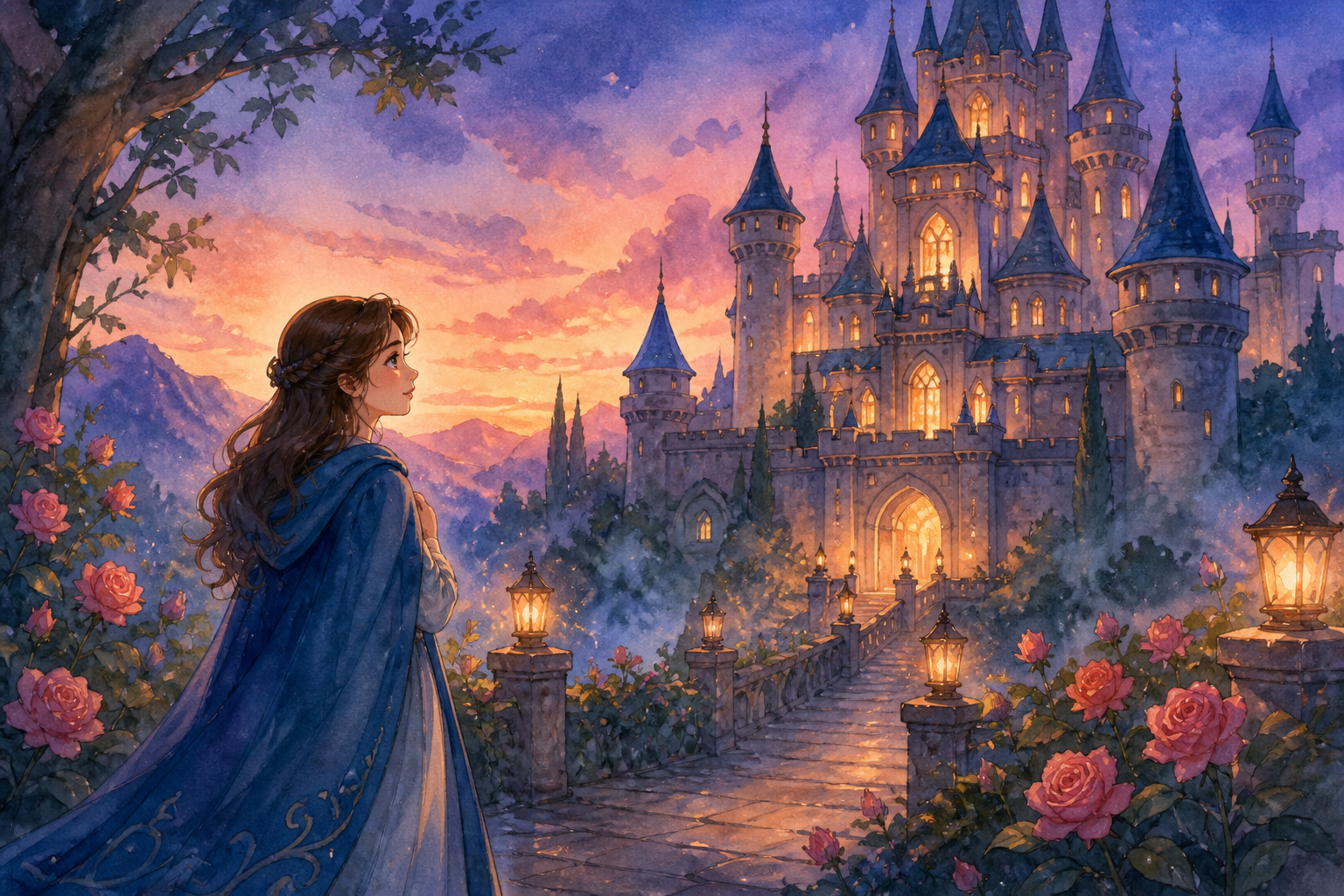
On the way home a wild snowstorm rose. The merchant lost the road and stumbled into a dark forest. Through the trees he saw lights. He found a grand castle with open gates and warm halls. A fine supper waited on a table, though no one appeared.
“Thank you, kind host,” he said, and ate gratefully. He slept in a soft bed and woke to sunshine.
In the garden he saw roses glowing like velvet. Remembering Beauty’s wish, he picked one bloom.
Suddenly a great Beast stood before him—tall, furred, and fierce to look at, yet speaking with a deep, clear voice.
“I welcomed you with food and shelter,” said the Beast. “And you steal my rose?”
The merchant trembled and explained about his daughter.
The Beast grew quiet. “Then let Beauty come in your place,” he said. “If she comes willingly, you may go free. If not, return yourself in three months.”
Sadly the merchant went home and told the truth. Beauty’s sisters wept loudly. Beauty hugged her father.
“I asked for the rose,” she said gently. “I will go.”
At the castle Beauty was afraid at first. Yet invisible servants brought warm meals, soft clothes, and a library filled with more books than she had ever dreamed of. Every evening the Beast came and spoke kindly.
“Did you sleep well?” he asked.
“Yes, thank you,” Beauty answered.
They walked in the gardens. They talked of stars, stories, and kindness. Each night the Beast asked softly, “Beauty, will you marry me?”
And each night Beauty said, “You are my friend. But I cannot marry you yet.”
The Beast never grew angry. He only looked sad and wished her good night.
Beauty began to see that a gentle heart mattered more than a handsome face. Still she missed her father. One evening she asked to visit home for a week.
“Go,” said the Beast. “But if you stay too long, my heart will break. Take this mirror. It will show you the castle when you wish.”
Beauty promised to return and rode home with gifts. Her father wept with joy. Her sisters smiled with envy.
A week passed. Then another day. Then another. Beauty’s sisters begged her to stay. “He is only a Beast,” they said. “Why rush back?”
That night Beauty looked into the mirror. She saw the Beast lying in the rose garden, weak and alone.
“Oh!” she cried. “I have stayed too long!”
She raced back to the castle, ran through the halls, and found him among the roses.
“Beast! Dear Beast, please wake,” she whispered, holding his paw. “I love you. I will marry you.”
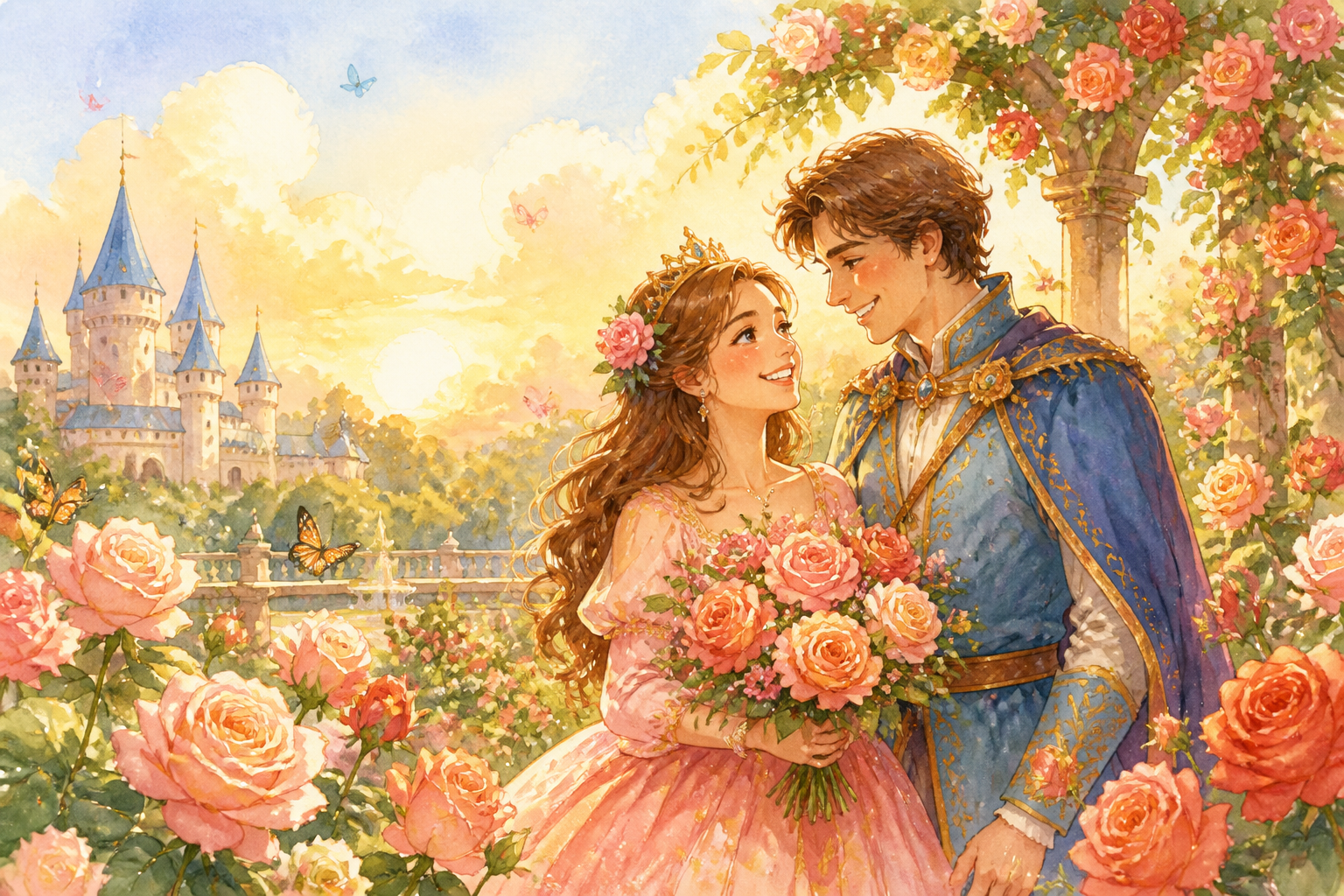
At her words soft light filled the garden. The Beast’s fur faded. In his place stood a young prince with kind eyes.
“A spell was cast on me,” he said, “to stay a Beast until someone loved me for my heart. Your kindness set me free.”
Beauty and the prince were married in the castle of roses. The merchant lived nearby in comfort. Even Beauty’s sisters learned, slowly, that envy makes a colder home than a cottage filled with love.
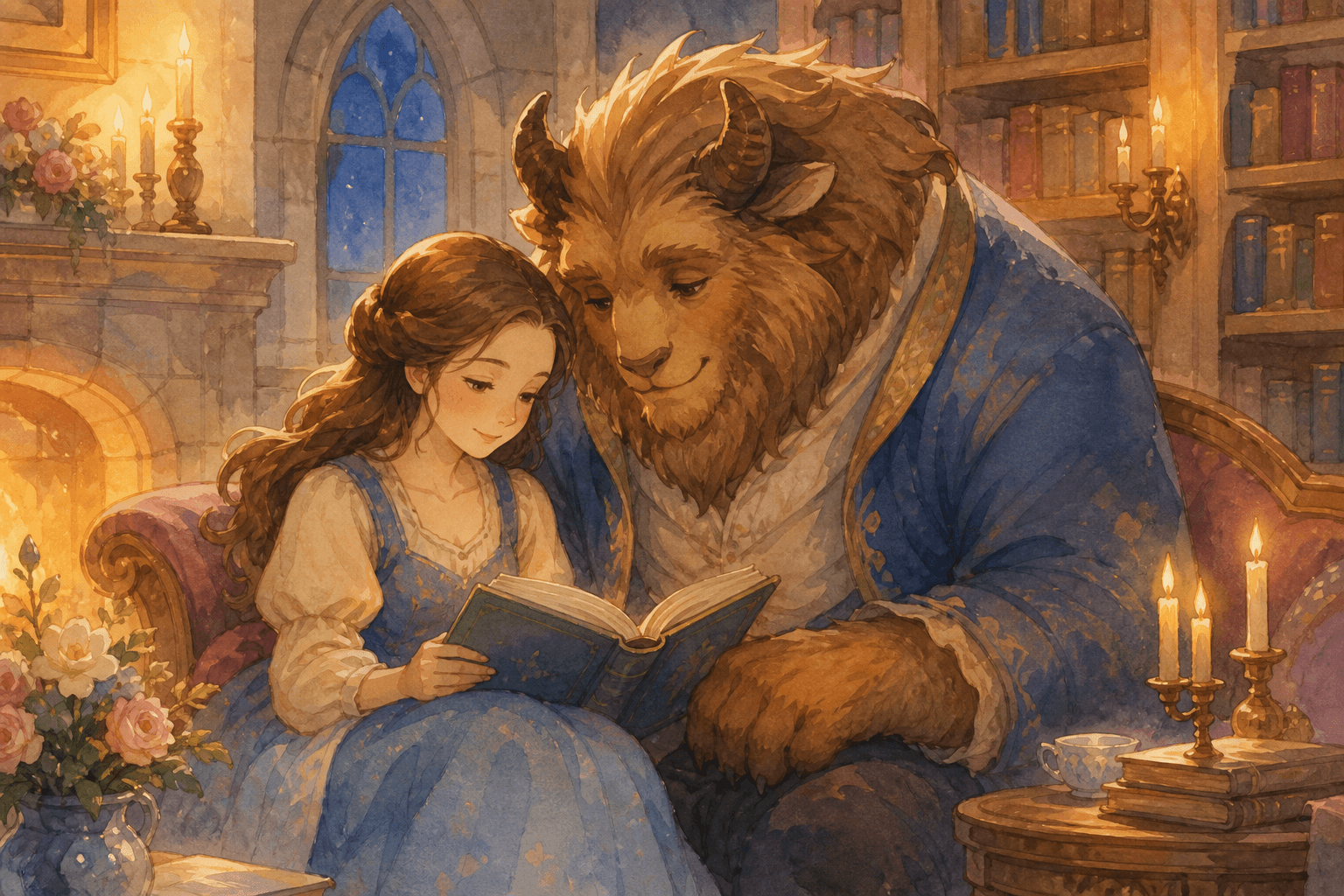
And on quiet evenings Beauty still read books in the library—sometimes alone, sometimes with the prince beside her—while the roses outside nodded in the moonlight.
The end.
Based on the public domain tale by Jeanne-Marie Leprince de Beaumont, gently adapted for bedtime.