Long ago there lived an emperor who loved new clothes more than anything else. He spent his gold on robes, coats, and shining hats, and cared little for walking in his gardens.
One day two clever weavers came to the city. They were not truly weavers at all—they were tricksters. They bowed low before the emperor.
“We can weave the most wonderful cloth in the world,” they said. “It is invisible to anyone who is foolish or unfit for his work.”
The emperor’s eyes widened. “I must have that cloth!” he cried. “Then I will know who is wise in my kingdom.”
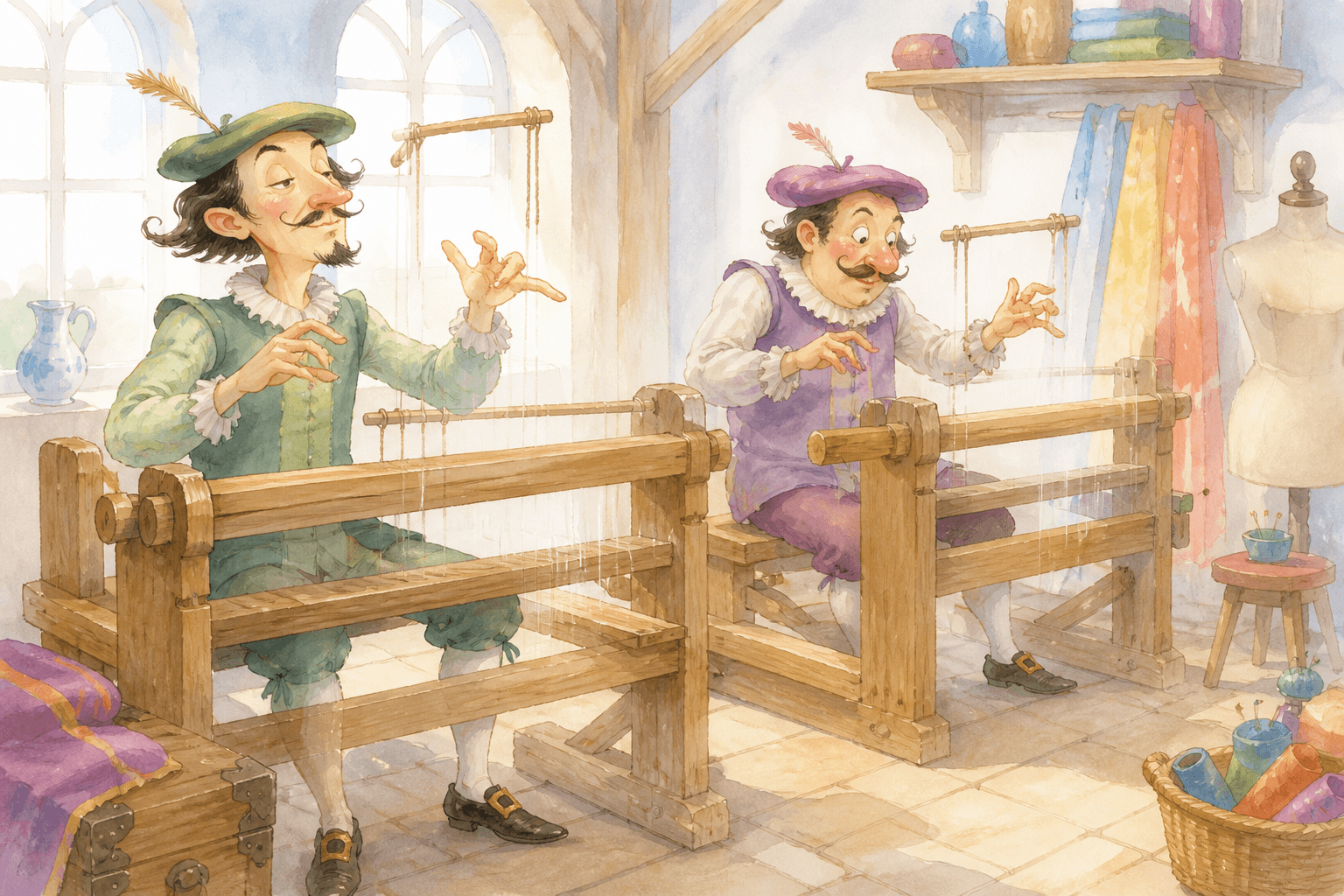
He gave the men gold, silk, and a fine room. The tricksters set up empty looms and pretended to weave late into the night. They cut the air with scissors and stitched nothing with golden needles.
The emperor sent his honest old minister to look. The minister saw no cloth at all—but he was afraid to seem foolish.
“How beautiful!” he said, though his heart felt uneasy.
Other servants said the same. Soon the whole court praised the invisible cloth. The tricksters asked for more gold, and more, and more.
At last the emperor himself came to see. He stared at the empty looms. He saw nothing. His cheeks grew warm.
“If I say there is no cloth,” he thought, “they will call me unfit to be emperor.” So he nodded wisely. “Magnificent! I shall wear it in the great parade.”
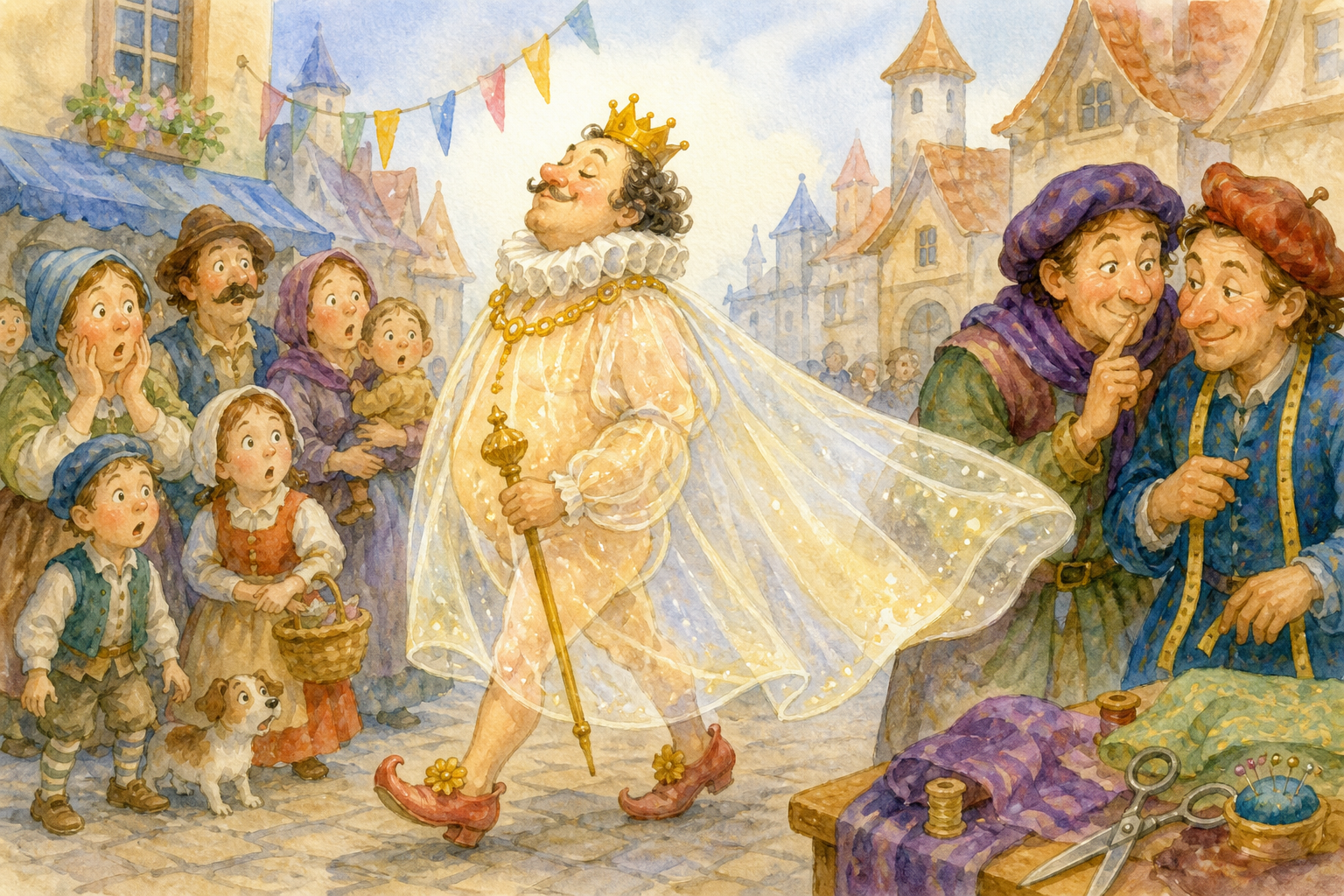
On parade day the tricksters pretended to dress him. They lifted invisible coats and tied invisible sashes. The emperor stepped into the street in his ordinary under-robes, believing he wore magic cloth.
Crowds lined the road. “What splendid clothes!” people whispered—because no one wanted to seem foolish.
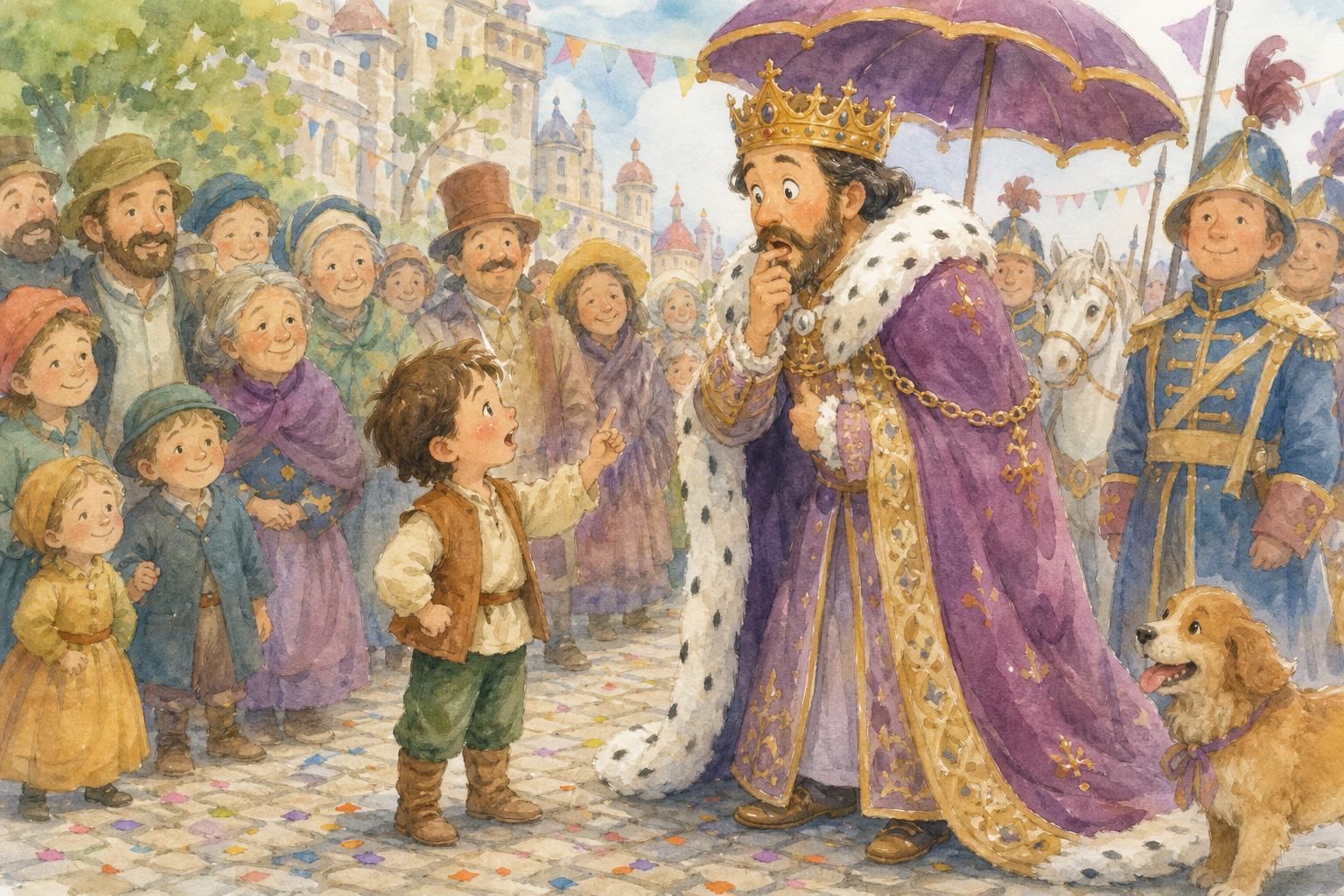
Then a little child tugged a mother’s sleeve and said clearly, “But he hasn’t got anything special on!”
A soft laugh moved through the crowd. Then another. The truth spread like sunshine. The emperor felt silly, yet he stood taller and finished the parade with quiet dignity.
That evening he thanked the child. “You reminded me that honesty is better than empty praise,” he said. He sent the tricksters away and spent more time with his people than with his wardrobe.
And if anyone ever brought him “invisible” gifts again, he only smiled and asked for something he could truly see and share.
The end.
Based on the public domain tale by Hans Christian Andersen, gently adapted for bedtime.